Forest Black - Platinum
- cloghopper72
- Dec 20, 2022
- 2 min read
Updated: Dec 20, 2022
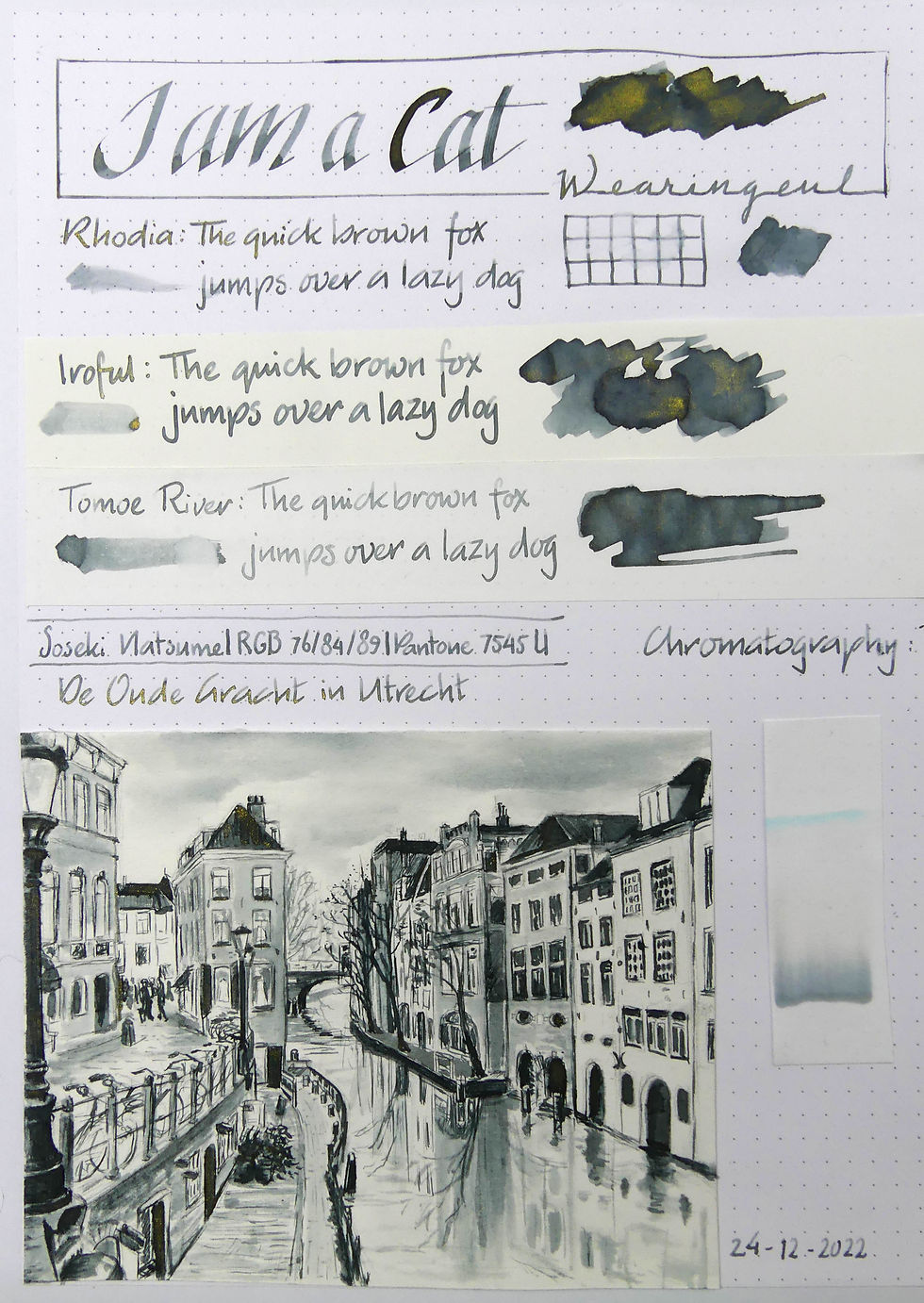
This is a Platinum Classic Ink. The name suggests it is more black than it actually is. When you write with it the green is not too saturated and it is a bit muted and a little bit watery. Hard to describe. Just have a look.

Okay, the title was written with my parallel pen and was dipped. So the colour came out more concentrated and therefor the ink looks more black. But when you look at the normal writing you see that it's an unsaturated medium green.

As you can see in the water test this is a more water resistant than most inks. When I use it in fountain pens I find it a bit dry. But for these samples I used my Kakimori dip nib.


And finally the sketch and chromatography:
The chromo is pale with a grey blue at the bottom and a pale lemon yellow at the top. Above that is a line of.... fog? No idea how to call this...
I made the sketch using a fine dip pen (not the Kakimori) and my aquabrush. It's nice to see how sometimes the yellow and blue showed up in the diluted washes. And because the dip pen makes more saturated, concentrated lines, the lines are very dark and almost black. So in my opinion this ink is great for sketching.
This sketch is of a brick coupure near Uithuizen in Groningen, the Netherlands

The sketch is of typical feature in the Netherlands. As a part of the old defense system against the sea flooding our land we have dykes. Our country is famous for this of course. We have different kinds of dykes. The one you see here is more land inwards. Some kilometers from the higher dykes at the coast. Because the land is below sea level it still can get flooded when the outer dykes break (or in other parts of the country where the rivers can flood). In that case we have one or even 2 more dykes to make sure not too much land gets flooded.
Problem is that there are roads crossing these defense lines. That is where they made openings in the dykes (the word "Coupure" comes from the French verb couper which means to cut). The road goes straight through the dyke. When there is a threat of flooding they close this opening with large heavy beams and enforce it with sand or horse manure. Very clever. In the photo below you can see another dyke opening (or coupure is another name for it). You can see the 2 vertical "gutters" in the concrete where the beams (under the roof on top of the dyke) need to be placed. Between those created beam walls the manure is put. When the manure gets wet it swells making the wall more watertight.

The dyke-opening on this photo is in 's-Heer Arendskerke in Zeeland in the south of the Netherlands.
I hope you enjoyed this quick water management lesson in Forest Black. I know I did... ;)


Lovely trees and composition !